
Remembering Historic Moments
1970 NBA Finals, Game 7 – Knicks vs Lakers (Willis Reed returns)

Published
3 months agoon
By
Joshua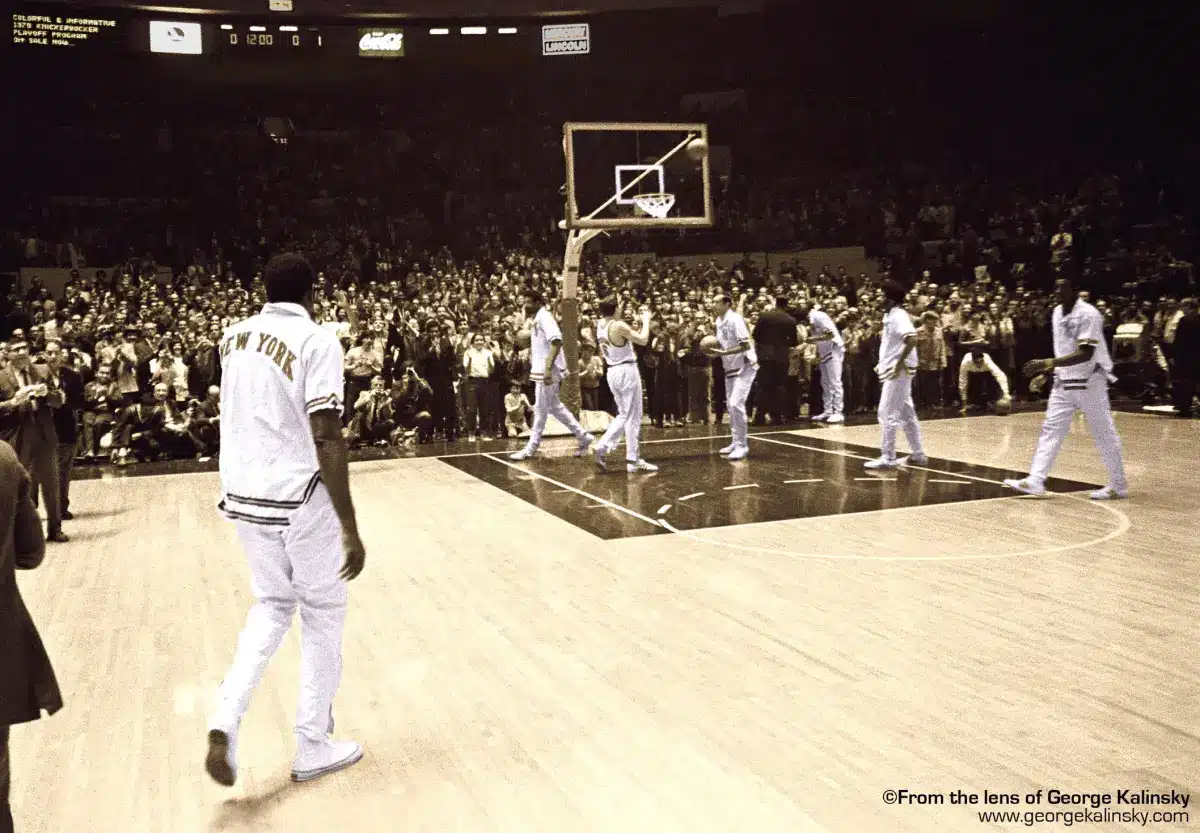
Date: May 8, 1970
Location: Madison Square Garden, New York City
Final Score: New York Knicks 113, Los Angeles Lakers 99
Series Result: Knicks win Finals 4–3
Game 7 of the 1970 NBA Finals decided the championship between the New York Knicks and the Los Angeles Lakers. The game is remembered as one of the most iconic moments in NBA history, defined by the unexpected return of Knicks captain Willis Reed and the performance that followed.
Game Context
The series had been highly competitive through six games. The Lakers, led by Jerry West, Wilt Chamberlain, and Elgin Baylor, were attempting to secure another championship for a veteran core. The Knicks, coached by Red Holzman, relied on balanced scoring, defense, and ball movement.
Reed, the Knicks’ captain and starting center, had suffered a severe thigh injury in Game 5 and missed Game 6 entirely. Entering Game 7, Reed’s availability was uncertain, and his absence was widely expected.
The Willis Reed Return
Shortly before tipoff, Reed emerged from the tunnel at Madison Square Garden. His presence immediately changed the atmosphere in the arena. Although visibly limited, Reed took his place in the starting lineup.
On the Knicks’ first offensive possession, Reed made a short jumper. Moments later, he scored again on a similar shot. Those two baskets would be Reed’s only points of the game, but their impact extended far beyond the box score.
Reed’s return provided an emotional lift to the Knicks and forced the Lakers to adjust defensively. Wilt Chamberlain, who had been expected to dominate the paint, was drawn into guarding Reed despite Reed’s limited mobility.
First Half
The Knicks built momentum quickly. Walt Frazier controlled the tempo, pushing the pace and finding teammates in transition and half-court sets. New York’s ball movement created open looks, while the defense limited the Lakers’ efficiency.
At halftime, the Knicks held a 57–42 lead. Reed remained on the floor primarily as a defensive presence and screener, while Frazier and the Knicks’ backcourt carried the offensive load.
Second Half
Los Angeles attempted to rally behind Jerry West, who scored consistently despite defensive pressure. Chamberlain and Baylor contributed offensively, but the Lakers struggled to close the gap.
The Knicks maintained control throughout the second half. Frazier continued to dictate play, and New York’s defense prevented sustained scoring runs. Reed did not score again but remained a visible presence, anchoring the defense and setting physical screens.
Statistical Summary
Willis Reed: 4 points, limited minutes (injured)
Walt Frazier: 36 points, 19 assists
Jerry West: 36 points
Wilt Chamberlain: 21 points, 24 rebounds
Frazier’s performance is regarded as one of the greatest Game 7 performances in Finals history. Reed, despite scoring only twice, was named NBA Finals MVP for his leadership and symbolic impact throughout the series.
Aftermath and Historical Significance
The Knicks’ 113–99 victory secured the first NBA championship in franchise history. Reed was named Finals MVP, becoming one of the few players to receive the award despite limited production in the deciding game.
Reed’s return became a defining moment in sports history, symbolizing leadership, toughness, and the psychological impact a player can have without statistical dominance. His presence shifted momentum before the game was fully underway.
Game 7 of the 1970 NBA Finals remains one of the most referenced championship games in league history, remembered not only for the result but for the moment Willis Reed stepped onto the floor and altered the course of the game.


You may like
Remembering Historic Moments
Larry Bird’s Left-Hand Game — Just Because He Felt Like It
Published
2 months agoon
January 29, 2026By
Joshua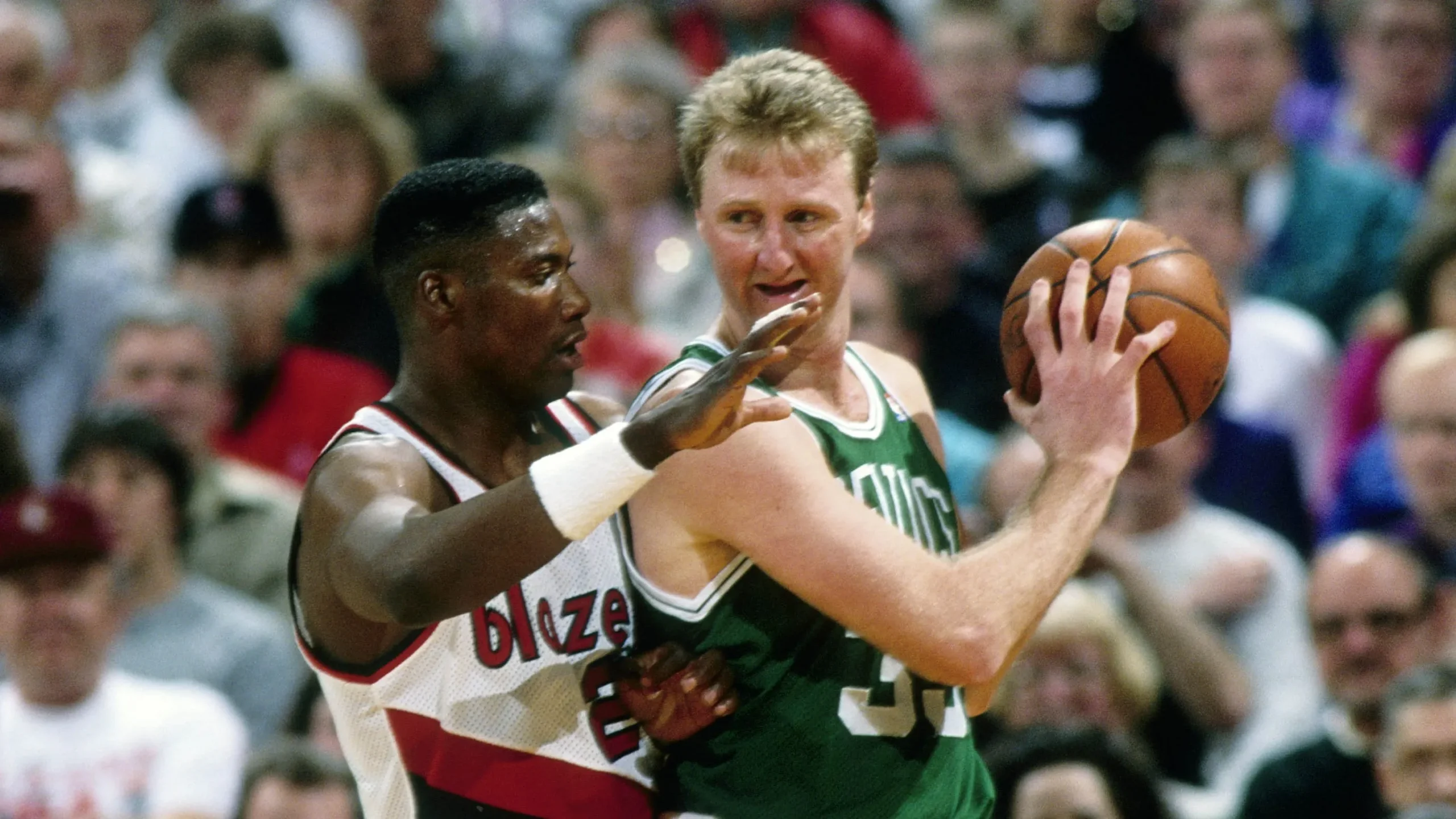
Date: February 14, 1986
Location: Boston Garden
Final Score: Boston Celtics 120, Portland Trail Blazers 119
Context: Regular Season
Larry Bird’s “left-hand game” isn’t remembered because he announced it. It’s remembered because he did it, because it worked, and because it felt so unmistakably like him.
On a February night in 1986, Bird decided he would play most of the game using his left hand — not as a gimmick, not as a joke, but as a quiet challenge to both himself and the opponent standing across from him. By the end of the night, he had produced one of the most casually dominant performances of his career.
The backstory — why Bird played left-handed
The Celtics were in the middle of a grueling stretch, and a nationally anticipated matchup against the Los Angeles Lakers loomed the following night. During warmups and early possessions, Bird mentioned to teammates that he planned to rely heavily on his left hand.
“I’m saving my right hand for the Lakers.”
It was classic Bird — equal parts confidence, humor, and challenge. But once the game started, it became clear he wasn’t exaggerating. He finished with his left. He passed with his left. He even took jumpers with his left when the moment called for it.
Where Bird was in his career
By the 1985–86 season, Larry Bird was already a two-time MVP and the reigning Finals MVP. This Celtics team was historically deep, disciplined, and ruthless. Bird was not chasing validation. He was operating from total command.
That context matters. This wasn’t a young star experimenting. This was a fully formed all-time great demonstrating that his understanding of the game could override convention.
First quarter — establishing control
Bird began the game in rhythm. Early on, Portland defended him conventionally, expecting the usual blend of shooting, post work, and passing.
Instead, Bird attacked off his left hand repeatedly — driving into the lane, using his body to shield defenders, and finishing with soft touch. The Celtics didn’t force the offense through him, but whenever a possession needed structure, Bird was there.
Second quarter — the realization sets in
As the game moved into the second quarter, Portland began to understand what was happening. Bird wasn’t favoring his left because he had to — he was doing it because he could.
Defenders tried to shade him back to his right. Bird countered by passing with his left hand, finding cutters and shooters without breaking stride.
Boston maintained offensive balance, but Bird’s fingerprints were everywhere: extra passes, perfectly timed rebounds, and finishes that looked routine despite being executed with his non-dominant hand.
Third quarter — the game tightens
Portland stayed close. The Trail Blazers didn’t fold, and the game developed into a back-and-forth contest. That only amplified Bird’s presence.
In the third quarter, Bird mixed in mid-range jumpers and post touches, still leaning heavily on his left. The crowd began reacting to the audacity — not loudly, but knowingly. This was mastery being put on display.
Fourth quarter — finishing without switching
The final quarter was where Bird’s choice became unavoidable. With the score tight and the outcome undecided, there was no practical reason to continue limiting himself.
He did anyway.
Bird scored, rebounded, and facilitated down the stretch using his left hand, closing out a one-point win without ever “needing” to abandon the experiment.
Larry Bird’s final stat line
Points: 47
Rebounds: 14
Assists: 11
Field Goals: 10-for-21 (left handed)
Free Throws: 5-for-5
The triple-double mattered. The efficiency mattered. But what mattered most was that none of it looked forced.
Why Bird was able to pull it off
Bird’s game was never built on speed or vertical explosion. It was built on angles, anticipation, footwork, and touch.
Playing left-handed didn’t remove his strengths — it highlighted them. He understood spacing so deeply that the hand he used became secondary to where he arrived on the floor.
Defenders weren’t being beaten by trickery. They were being beaten by timing.
How it impacted the Celtics
The Celtics never lost flow. If anything, Bird’s comfort elevated everyone else. Teammates cut harder, passed quicker, and trusted that the ball would arrive exactly where it needed to be.
Boston didn’t win because of novelty. They won because their best player could remove half his toolbox and still control the game.
Remembering Historic Moments
Devin Booker’s 70-Point Game — A Night That Transformed A Career
Published
2 months agoon
January 29, 2026By
Joshua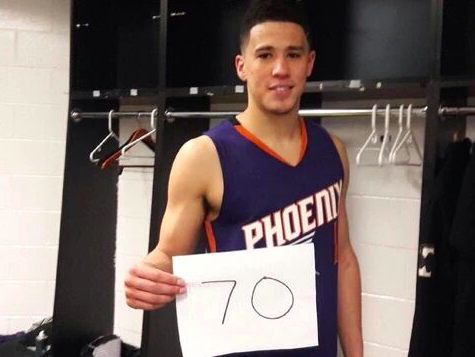
Date: March 24, 2017
Location: TD Garden, Boston
Final Score: Boston Celtics 130, Phoenix Suns 120
Context: Regular Season
Devin Booker’s 70-point night in Boston is remembered for two things at once: the sheer volume of scoring, and the strange, unforgettable reality that it came in a loss. That combination is part of what made it so startling. A 20-year-old guard, on a rebuilding team, walked into one of the league’s most historic buildings and authored a scoring performance that belonged to a different era.
The Celtics won the game. But the night belongs to Booker — a second-year player who was still being introduced to casual fans, who suddenly forced the league to treat him like something inevitable.
Where Booker was in his career at the time
Booker entered the NBA in 2015 as the 13th pick, known primarily as a shooter. By his second season, Phoenix had begun handing him the keys as a primary creator — not just a spacer, but a featured offensive engine.
The 2016–17 Suns were young, shorthanded, and far from playoff contention. That matters because the environment around Booker was not built to protect him with veteran stability. He was learning in public — carrying usage, seeing double teams, and trying to generate offense for lineups that often had limited scoring around him.
That’s why the 70 wasn’t just “a hot night.” It was a snapshot of a player’s ceiling cracking into the open.
What was working — and why the scoring felt effortless
Booker didn’t score 70 with one move. He scored 70 because Boston had to guard every part of his game, and once the night got rolling, Phoenix leaned fully into letting him read the floor.
1) Three-level scoring: Booker mixed pull-up jumpers, drives, midrange rhythm shots, and spot-up threes.
2) Foul pressure: When defenders got close, he turned contact into free throws. His scoring rate ballooned at the line.
3) Endurance and volume: He played nearly the entire game and carried the offense possession after possession.
4) Late-game urgency: Once Phoenix saw history was possible, the Suns ran offense to keep him involved constantly.
The final blueprint reads simple: score early enough to build rhythm, stay aggressive through Boston’s lead, then pour it on when the pace and urgency increase in the second half.
First quarter — Boston’s control, Booker’s early probing
The Celtics set the tone immediately. Boston scored 29 in the opening quarter while Phoenix managed 16. The Suns were behind early, and the game’s initial shape looked like a mismatch — playoff-bound team at home versus a young roster on the road.
Booker, though, was already establishing the areas he wanted. He wasn’t forcing chaos. He was taking the first clean shots he saw, getting downhill when lanes opened, and beginning the long work of turning a blowout game into a scoring opportunity.
Second quarter — Boston’s 3-point burst creates the mountain
The second quarter is where the game almost ends — and where Booker’s night begins to take a different form. Boston erupted for 37 points in the period, hitting a wave of threes and stretching the lead as high as 26.
Phoenix scored 27 in the quarter, but the Suns were still chasing. The Celtics’ spacing and pace put Phoenix in rotation constantly, and Isaiah Thomas controlled the tempo the way elite lead guards do when they sense a game can be buried.
At halftime, Booker had 19 points. That matters because the legend of “70” can make it sound like he was at 40 early. He wasn’t. It was a steady first half — and then a historic second.
Third quarter — the takeover begins
Booker came out of halftime like a player determined to make the scoreboard listen. He scored 23 points in the third quarter alone, turning the game from “Boston coasting” into “Boston paying attention again.”
This is where his scoring became layered. When defenders played him high, he drove into contact. When they backed up, he rose into jumpers. When help arrived late, he lived at the free-throw line.
Phoenix outscored Boston 37–31 in the third. The Celtics were still ahead, but the margin had been wounded — and Booker had entered the rare zone where every touch feels like it can become points.
Fourth quarter — 28 points, and the building changes
Booker scored 28 points in the fourth quarter. That is the heart of the story. This is where the night stops being “great game” and becomes “history.”
Phoenix fed him almost every time down the floor. The Suns used late timeouts to draw up touches, extend possessions, and keep him involved. It created a strange, highly visible chase: Boston trying to win, Phoenix trying to win too — but also trying to complete something bigger.
The Celtics, to their credit, didn’t stop competing. They kept answering with shot-making and free throws, keeping separation just wide enough to prevent Phoenix from stealing the game outright.
Yet the most memorable detail from the closing minutes wasn’t tactical. It was the sound inside TD Garden. As Booker climbed past 60 and then pushed toward 70, some Boston fans began cheering the scoring itself — recognizing that the opponent was delivering something that doesn’t happen often enough to pretend you didn’t see it.
Booker’s final stat line
Points: 70
Minutes: 44:58
Field Goals: 21-for-40
3-Pointers: 4-for-11
Free Throws: 24-for-26
Rebounds: 8
Assists: 6
Steals: 3
Blocks: 1
Turnovers: 5
The stat line tells you the structure: high-volume shot-making, heavy free-throw production, and enough playmaking to punish traps. It also tells you the workload: nearly 45 minutes with the offense orbiting him.
How Booker impacted the Suns in the game
Phoenix’s offense was built around Booker’s gravity. When he heated up, Boston’s defense had to tilt toward him — bringing extra attention above the arc, sending help into the lane, and closing harder on his pull-ups.
That attention created two things for the Suns: cleaner looks for teammates and a way to stay emotionally alive in a game where they had every reason to fold. The Suns didn’t win, but they kept competing because Booker gave the game a heartbeat.
Even the way Phoenix played late reflected his impact: the urgency to extend the game, the intentional fouling, the timeouts to manufacture touches — it all existed because everyone on the floor understood that something rare was unfolding.
What made it historic — and why it’s still debated
The night became a cultural moment for two reasons at once. First: 70 points is an exclusive number in NBA history, regardless of context. Second: the late-game approach was openly designed to maximize Booker’s chances to reach it.
Some saw that as uncomfortable. Others saw it as honest — a rebuilding team choosing to celebrate its brightest young star in real time. Either way, it made the moment impossible to ignore. You couldn’t pretend it was a normal “career high.” It was a franchise choosing to mark a night as special while it was still happening.
The Celtics won 130–120. But the game is remembered as Booker’s because it revealed a truth the league would spend years confirming: Devin Booker wasn’t just a scorer. He was a future offense by himself.
Remembering Historic Moments
Russell Westbrook’s 20–20–20 Tribute Game — Playing Through Grief
Published
2 months agoon
January 29, 2026By
Joshua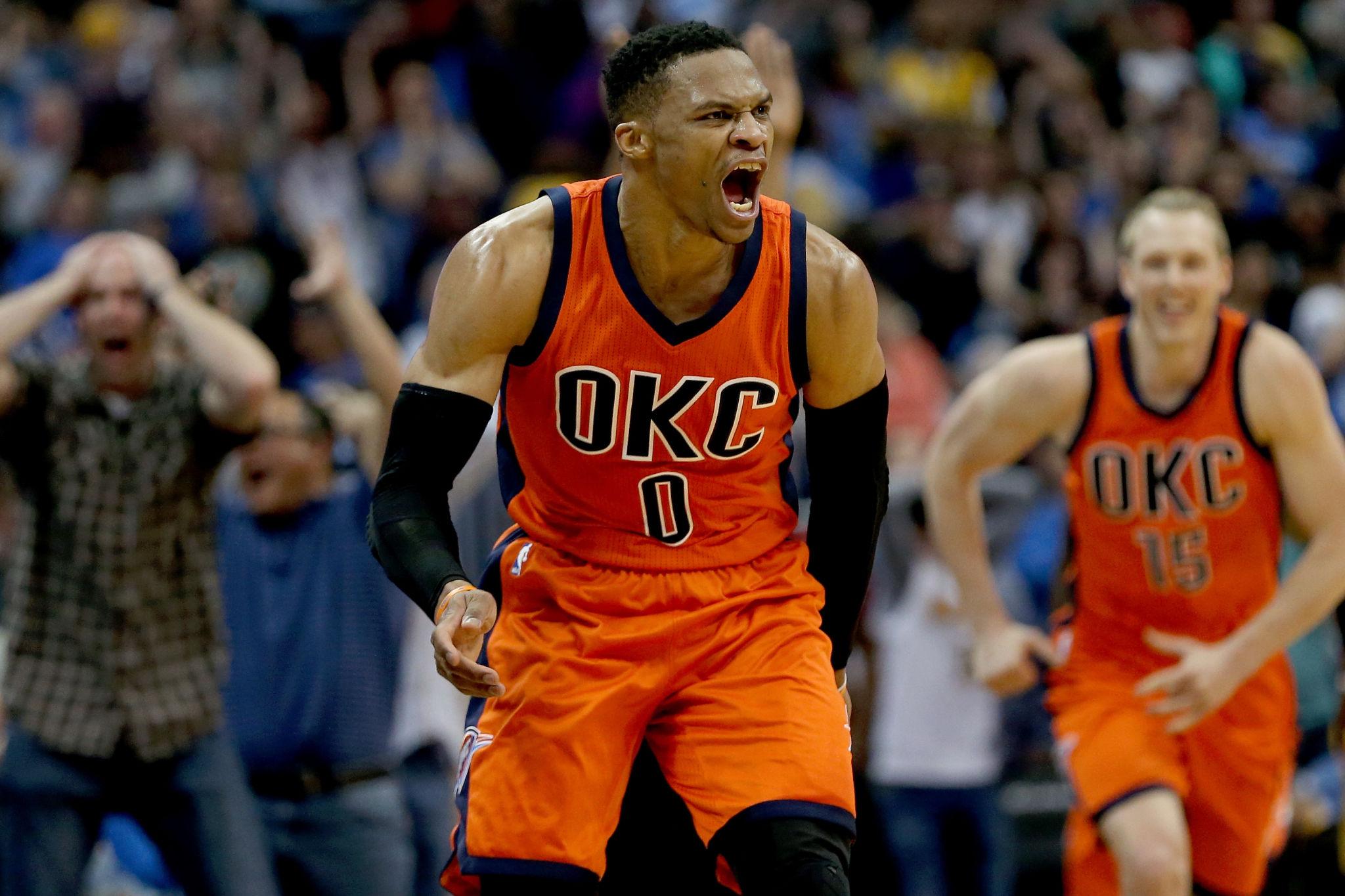
Date: April 2, 2019
Location: Chesapeake Energy Arena, Oklahoma City
Final Score: Oklahoma City Thunder 119, Los Angeles Lakers 103
Context: Regular Season
On April 2, 2019, Russell Westbrook authored one of the most emotionally charged stat lines in NBA history. It wasn’t built for record books or debate segments. It was built for someone else.
Westbrook finished the night with 20 points, 20 rebounds, and 21 assists — the first 20–20–20 game in the NBA since Wilt Chamberlain in 1968. But the numbers were secondary. This game was a tribute, a release, and a rare moment where grief and competition collided in real time.
What was happening before the game
One day earlier, the basketball world was shaken by the death of Nipsey Hussle, who was fatally shot in Los Angeles on March 31, 2019. The loss hit Westbrook personally. Nipsey was not just a public figure to him — he was family.
Westbrook grew up in Los Angeles. Nipsey did too. Their bond wasn’t built on celebrity proximity but on shared roots, shared neighborhoods, and shared values. Nipsey often spoke publicly about Westbrook’s loyalty, discipline, and authenticity. Westbrook, in turn, viewed Nipsey as a voice of leadership and purpose far beyond music.
Hours before tipoff, Westbrook posted a message dedicating the game to Nipsey Hussle. It wasn’t cryptic. It was direct. He wrote that he would play for him.
The emotional weight Westbrook carried
Players often say they “play heavy” when something personal follows them onto the floor. This night, it showed. Westbrook was visibly emotional throughout warmups and early stretches of the game. Teammates later said he was quieter than usual — locked in, but carrying something.
What made the performance different wasn’t aggression alone. It was patience. Westbrook didn’t hunt shots. He hunted impact.
First quarter — setting the tone
From the opening possession, Westbrook was intent on controlling the game’s flow. He pushed the ball, found shooters, and attacked the glass immediately. He recorded multiple assists in the first few minutes, signaling what kind of night this would be.
Oklahoma City played fast but organized. Paul George scored efficiently early, while Steven Adams benefited from Westbrook’s pressure collapsing the defense.
Second quarter — the rebounding becomes intentional
By the second quarter, it became clear Westbrook was tracking more than the score. He crashed the defensive glass relentlessly, often outmuscling larger players to secure rebounds and immediately ignite the break.
His assists weren’t flashy-only passes. They were early hit-aheads, quick reads to cutters, and deliberate possessions where he slowed the game just enough to let teammates finish.
Third quarter — control without forcing
Oklahoma City began to pull away in the third quarter. Westbrook continued to prioritize playmaking and rebounding, scoring when the defense allowed it rather than forcing the issue.
By the end of the quarter, he was already flirting with a historic stat line — but he never chased it. The rhythm came naturally because he never left the game.
Fourth quarter — when the arena realized what was happening
As the fourth quarter unfolded, the crowd began to understand what they were witnessing. Each rebound drew louder reactions. Each assist was tracked.
When Westbrook secured his 20th rebound and later delivered his 20th assist, the arena erupted — not with celebration, but recognition. Teammates on the bench stood immediately.
Westbrook later confirmed that he knew exactly what he was doing. He wasn’t chasing history for himself. He was fulfilling a promise he made earlier that day.
Russell Westbrook’s final stat line
Points: 20
Rebounds: 20
Assists: 21
Field Goals: 8-for-23
Free Throws: 3-for-6
It was not an efficient shooting night. It wasn’t supposed to be. The performance was about volume of influence, not shooting percentage.
How he impacted the Thunder beyond the numbers
Westbrook dictated pace for all 48 minutes. Every major Thunder run began with his rebound or his pass. He placed teammates in rhythm rather than demanding they adjust to him.
The Lakers were never able to control transition defense because Westbrook never allowed them to set. Even made baskets became opportunities for him to reset tempo.
The meaning of 20–20–20
Historically, the stat line is rare. Emotionally, it was singular. Westbrook said after the game that the number “20” represented Nipsey.
It was intentional. It was personal.
The game became something larger than basketball — a reminder that players do not leave their lives at the arena doors. Sometimes, they bring them onto the floor and let the game carry the weight.
Why this game endures
Years later, this performance is still cited not because of debate or analytics, but because of context. The numbers mattered because of why they existed.
Russell Westbrook didn’t just play through emotion that night. He transformed it into structure, discipline, and purpose.
The 20–20–20 game remains one of the clearest examples of basketball serving as expression — not escape, but tribute.
Quiz of the Day
Newsletter
Love hoops trivia? Join the CourtSideHeat newsletter — get fresh quizzes, score updates, and weekly challenges in your inbox.
- Join thousands of fans already subscribed.
- Challenge friends or play solo.
- Always free.
